
Doctor-led product guidance

Why this product — and when another may suit you better.

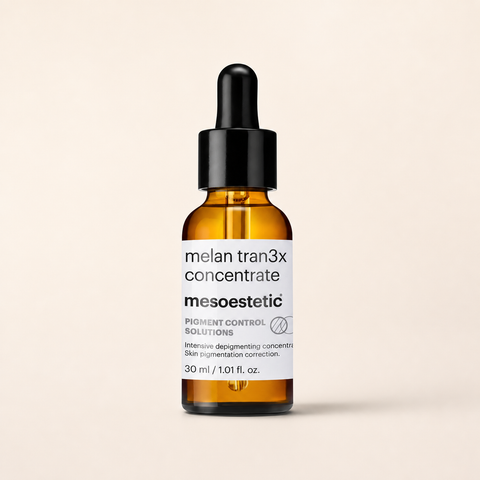
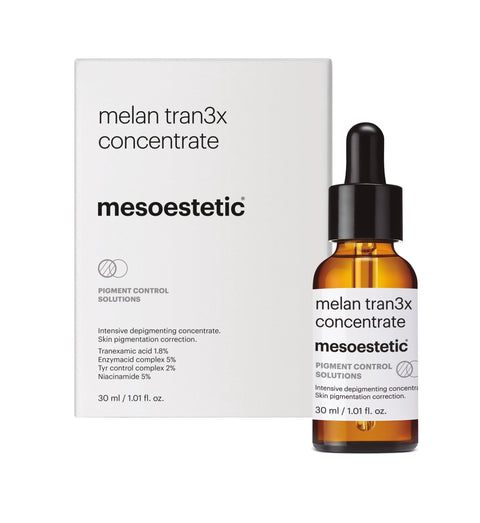
Whilst designed as part of a broader pigmentation system it is a great stand alone product for both pigmentation and acne. The key ingredients here focus on reducing inflammation whilst also blocking the enzyme responsible for transporting pigment into the superficial layers of the skin. The main ingredients here are niacinamide, kojic acid and tranexamic acid. What makes this product even more powerful is the addition of both an alpha-hydroxy acid (mandelic acid) as well as a beta-hydroxy acid (salicylic acid). Both of these acids not only reduce inflammation but are also great for helping to increase skin cell turnover, breakdown excess sebum sitting in pores and as such can help prevent and treat acne.

Why it made The Curatory

When I’m looking for and trying out products for The Curatory I need to ensure that the formulation does what it says on the bottle and the company that makes it has studied not only the individual ingredients but the formulation itself. Mesoestetic do extensive testing in their lab near Barcelona and pile most of their profits into research and development - particularly with their pigmentation systems. 

Aside from the brand, melan tran3x concentrate is an incredibly powerful and versatile tool for helping to treat pigmentation including melasma as well as acne and associated post-inflammatory hyperpigmentation (PIH). It’s easy to apply, easy to slot into a skincare routine, very well tolerated on the skin and although not important from a skincare perspective it smells amazing too.

It may suit you if…

A stronger fit if uneven pigmentation or post-blemish marks are established concerns and your skin tolerates active serums.

Another option may be better if…

Another option may be more appropriate if the cause of pigmentation is unclear, it is changing, or your skin is reactive or already using several exfoliating products.

What to expect

Pigmentation changes slowly and can recur. Consistent sunscreen is essential, and a consultation may identify when a prescription-only or more intensive initial plan is more appropriate.

Product overview

Whilst designed as part of a broader pigmentation system it is a great stand alone product for both pigmentation and acne. The key ingredients here focus on reducing inflammation whilst also blocking the enzyme responsible for transporting pigment into the superficial layers of the skin. The main ingredients here are niacinamide, kojic acid and tranexamic acid.

What makes this product even more powerful is the addition of both an alpha-hydroxy acid (mandelic acid) as well as a beta-hydroxy acid (salicylic acid). Both of these acids not only reduce inflammation but are also great for helping to increase skin cell turnover, breakdown excess sebum sitting in pores and as such can help prevent and treat acne.

The formulation itself is water-based, fast absorbing and easy to incorporate into your routine.

Routine placement Where this fits Morning + EveningTargeted pigment care

A broad guide to where this sits, without assuming how many steps your routine has.

How to introduce it

As this is a water-based serum it’s very easy to slot into your routine in both the morning and the evening although to avoid sensitivity it’s worth starting just in the evening.

As it’s a thin product it should feature early in your skincare routine either after cleansing, or if you are using any toning products after toning. 5-6 drops should be enough to cover your face and neck. Massage gently into your skin and allow the concentrate to absorb before continuing with your routine. 

Once you’re using it daily for 3-4 weeks then you can step up to twice daily.

As always if you have any questions or would like to have a skin plan tailored to your individual needs then please do book a consultation.

Guidance continues after purchase. We can help you introduce, simplify or adjust this product.

Inside the formula

The ingredients that make this special

A closer look at the ingredients doing the most meaningful work in this formula—and what the evidence can reasonably tell us.

Niacinamide

Antioxidant and anti-inflammatory that helps to improve skin barrier and reduce pigmentation and redness.

Read the clinical context

Niacinamide is a jack of all trades ingredient. Most of its evidence base is for improving pigmentation but also acts as an anti-oxidant ingredient helping to reduce redness and inflammation as well as supporting skin barrier function.

Tranexamic Acid

An ingredient that helps support a more even-looking skin tone.

Read the clinical context

Tranexamic Acid is used in skincare to help reduce the appearance of pigmentation and dark spots. There is growing clinical evidence supporting its role in improving melasma and UV-induced pigmentation, particularly when used consistently and combined with other brightening ingredients. Most topical studies are relatively small, but results are promising and it is generally well tolerated compared with stronger pigment-targeting treatments. It works by helping to reduce the pathways that stimulate excess pigment production, making it a useful option for uneven or reactive skin.

Mandelic Acid

A gently exfoliating AHA that increases skin cell turnover and reduces inflammation associated with acne.

Read the clinical context

Mandelic Acid is an alphahydroxy acid (AHA) which means that it’s an ingredient that acts as a keratolytic, or a chemical exfoliant. Unlike other AHAs, mandelic acid is a really large molecule. This means that it doesn’t penetrate quite as quickly or as deeply as other AHAs (like glycolic and citric acid). That makes it perfect for those with more sensitive skin types. Because of its anti-inflammatory properties, it’s also great at calming down the redness associated with acne or as an entry level AHA for those with more sensitive skin or rosacea.

Salicylic acid

An exfoliating BHA that helps to increase skin cell turnover and support the treatment of acne.

Read the clinical context

Salicylic acid is a betahydroxy acid (BHA) that has a number of benefits, particularly for acne-prone skin. Its most well studied benefit is as a chemical exfoliant, particularly when with a lower pH. This increases how quickly skin cells turnover, bringing healthy skin cells to the surface. It’s also a hydrophobic or oil-loving molecule so helps to break down excess sebum and unclog the oxidised sebum trapped in pores (black heads). If that weren’t enough, salicylic acid is also anti-inflammatory and helps to calm redness associated with acne.

Kojic Acid

A brightening ingredient that helps reduce the appearance of dark spots.

Read the clinical context

Kojic Acid is derived from certain fungi and works by inhibiting tyrosinase, the enzyme involved in melanin production. There is moderate clinical evidence supporting its ability to improve hyperpigmentation, particularly when used consistently and in combination with other pigment-regulating ingredients. However, it can be irritating for some skin types, especially at higher concentrations, and stability within formulations can be a challenge. It is most commonly used to help fade uneven pigmentation and support a more even-looking skin tone.

View the complete ingredients list

Aqua, Bis-PEG-12 Dimethicone, Butylene Glycol, Hydroxyethyl Urea, Niacinamide, Tranexamic Acid, Mandelic Acid, Polymethylsilsesquioxane, Lactic Acid, Sodium Citrate, Sodium Hydroxide, Kojic Acid, Plankton Extract, Bacillus Ferment, Acetyl Glycyl Beta-Alanine, Glycogen, Ethylhexylglycerin, Propylene Glycol, Glycerin, Salicylic Acid, Citric Acid, Xanthan Gum, Polyacrylate Crosspolymer-11, Aminoethylphosphinic Acid, Disodium EDTA, Sclerotium Gum, Lecithin, Pullulan, Pentylene Glycol, Sodium Hyaluronate Crosspolymer-2, Silica, Potassium Sorbate, Sodium Metabisulfite, Phenoxyethanol, Parfum.

The thinking behind the formula

More about mesoestetic

mesoestetic began in a pharmacy in Barcelona and has developed into a pharmaceutical laboratory working across cosmetic skincare and aesthetic medicine. The company develops and manufactures its products locally, allowing it to oversee formulation, production and quality control.

Research and professional collaboration remain central to its approach. Its range covers concerns including pigmentation, blemish-prone skin, skin ageing and sun protection, with products designed for both everyday skincare and use alongside professional treatment.