
Doctor-led product guidance

Why this product — and when another may suit you better.

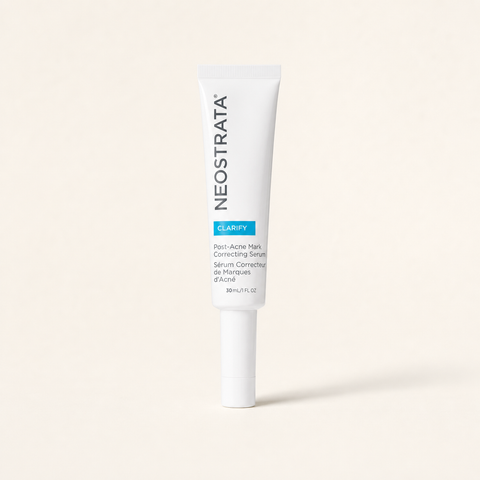
Unassuming in its packaging, this product is a bit of a powerhouse for helping to reduce pigmentation and redness after breakouts. The key ingredients here fall into two main categories - anti-inflammatories to help reduce redness, and tyrosinase inhibitors to help prevent and treat pigmentation. In this Post-Acne Mark Correcting Serum you’ll find niacinamide, tranexamic acid, 4-butylresorcinol, licorice root extract, ascorbyl glucoside (Vitamin C) and NeoGlucosamine which is Neostrata’s patented non-acid amino sugar that helps gently exfoliate to lift pigmentation. The thin gel-like consistency makes this product very easy to apply and add into your routine as a spot treatment alongside any other products that you’re using.

Why it made The Curatory

Lots of the targeted acne treatments that I’ve listed focus on prevention and treatment, but really with acne, this is only the tip of the iceberg. The redness and pigmentation that persist after a breakout can be similarly debilitating and certainly last longer. Although this treatment (along with all others) isn’t a silver bullet for getting rid of redness and pigmentation overnight, it will certainly speed the process up.

The reason I chose this product specifically for The Curatory is the sheer number of different active ingredients packed into the formulation. It covers nearly all bases in terms of targeting both inflammation and pigmentation and at a relatively reasonable price point.

It may suit you if…

A stronger fit if blemishes have settled but post-inflammatory marks remain a priority.

Another option may be better if…

Another option may be more appropriate if acne is active, painful or scarring, or the marks are not clearly related to previous blemishes.

What to expect

Post-blemish marks fade gradually over weeks to months and sunscreen helps prevent persistence. It will not control every cause of active acne.

Product overview

Unassuming in its packaging, this product is a bit of a powerhouse for helping to reduce pigmentation and redness after breakouts.

The key ingredients here fall into two main categories - anti-inflammatories to help reduce redness, and tyrosinase inhibitors to help prevent and treat pigmentation. In this Post-Acne Mark Correcting Serum you’ll find niacinamide, tranexamic acid, 4-butylresorcinol, licorice root extract, ascorbyl glucoside (Vitamin C) and NeoGlucosamine which is Neostrata’s patented non-acid amino sugar that helps gently exfoliate to lift pigmentation.

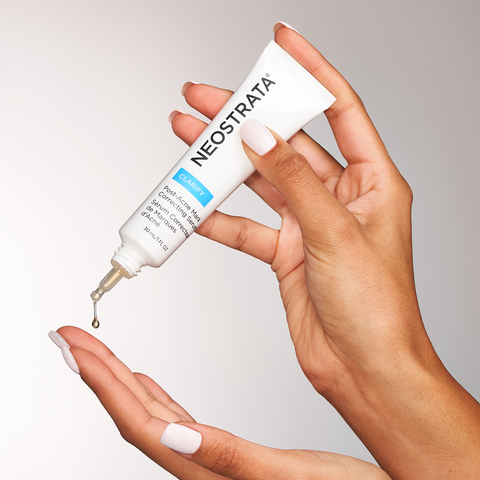
The thin gel-like consistency makes this product very easy to apply and add into your routine as a spot treatment alongside any other products that you’re using.


Routine placement Where this fits Morning + EveningTargeted mark care

A broad guide to where this sits, without assuming how many steps your routine has.

How to introduce it

This product has been designed to be simple to integrate into your existing routine as and when you need it. If you tone after cleansing then apply a thin layer and allow to dry before continuing with the rest of your skincare routine. It can be used in both the morning and evening. 

Please note that even with additional help both PIE (redness) and PIH (pigmentation) after breakouts is not an overnight process and can take up to 2 or 3 skin cycles to resolve. Consistency and patience is key. If you’re struggling to manage your skin or need any further help on how to treat your PIE or PIH then please get in touch with us.

Guidance continues after purchase. We can help you introduce, simplify or adjust this product.

Inside the formula

The ingredients that make this special

A closer look at the ingredients doing the most meaningful work in this formula—and what the evidence can reasonably tell us.

Niacinamide

Antioxidant and anti-inflammatory that helps to improve skin barrier and reduce pigmentation and redness.

Read the clinical context

Niacinamide is a jack of all trades ingredient. Most of its evidence base is for improving pigmentation but also acts as an anti-oxidant ingredient helping to reduce redness and inflammation as well as supporting skin barrier function.

Tranexamic Acid

An ingredient that helps support a more even-looking skin tone.

Read the clinical context

Tranexamic Acid is used in skincare to help reduce the appearance of pigmentation and dark spots. There is growing clinical evidence supporting its role in improving melasma and UV-induced pigmentation, particularly when used consistently and combined with other brightening ingredients. Most topical studies are relatively small, but results are promising and it is generally well tolerated compared with stronger pigment-targeting treatments. It works by helping to reduce the pathways that stimulate excess pigment production, making it a useful option for uneven or reactive skin.

Ascorbyl Glucoside

A stable vitamin C derivative that helps brighten and support antioxidant protection.

Read the clinical context

Ascorbyl Glucoside is a water-soluble derivative of vitamin C designed to be more stable and less irritating than pure ascorbic acid. Once applied, it is gradually converted into active vitamin C within the skin. Laboratory studies support its antioxidant activity, and small clinical studies suggest it may help improve brightness and uneven pigmentation with consistent use. However, its effects are generally milder compared to high-strength pure vitamin C. It is commonly used in formulations aimed at supporting radiance and protecting the skin from environmental stress.

Liquorice Root Extract

A soothing and brightening botanical extract that helps support a more even-looking complexion.

Read the clinical context

Liquorice Root Extract contains compounds such as glabridin and liquiritin, which are associated with calming and pigment-regulating effects. There is moderate evidence, including small clinical studies, suggesting it may help reduce the appearance of hyperpigmentation and redness. Laboratory data also supports its anti-inflammatory and antioxidant activity. While results are generally milder than prescription treatments, it is well tolerated and commonly used in formulations designed for sensitive, reactive or uneven skin.

NeoGlucosamine

A gentle exfoliating and skin-supporting ingredient that may help improve tone and texture.

Read the clinical context

NeoGlucosamine (N-acetyl glucosamine) is an amino sugar that plays a role in the skin’s natural support structures, including hyaluronic acid production. Early clinical studies suggest it may help improve skin texture and reduce the appearance of hyperpigmentation, particularly when combined with other active ingredients. It also provides very mild exfoliating effects and may support hydration. While results are promising, much of the published data is manufacturer-sponsored, and more independent large-scale studies would help clarify the extent of its benefits.

View the complete ingredients list

Aqua/water/eau, propanediol, acetyl glucosamine, niacinamide, alcohol denat, tranexamic acid, ascorbyl glucoside, epilobium angustifolium flower/leaf/stem extract, 4-butylresorcinol, glycyrrhiza glabra (licorice) root extract, xanthan gum, sodium bisulfite, sodium hydroxide, caprylyl glycol, disodium edta, chlorphenesin, phenoxyethanol.

The thinking behind the formula

More about NeoStrata

NeoStrata grew from the work of dermatologists Dr Eugene Van Scott and Dr Ruey Yu, whose research helped establish the use of alpha hydroxy acids in modern skincare. The brand has continued to develop acid-based technologies, including polyhydroxy acids, with an emphasis on how active ingredients are formulated and tolerated.

That history is relevant to the Restore Cleanser: gluconolactone is not included simply because acids are fashionable, but as part of a gentle formula intended to support comfortable, consistent cleansing.