
Dr Max’s view

Why I chose it

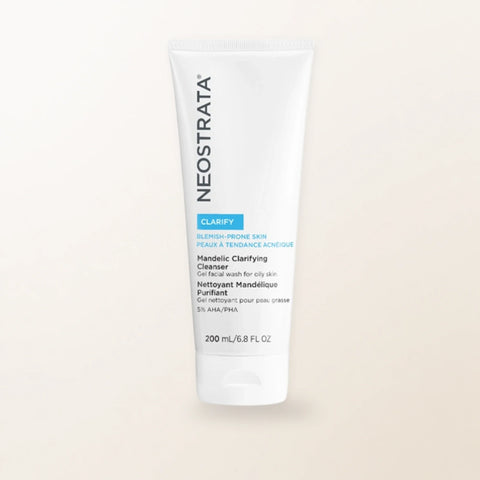
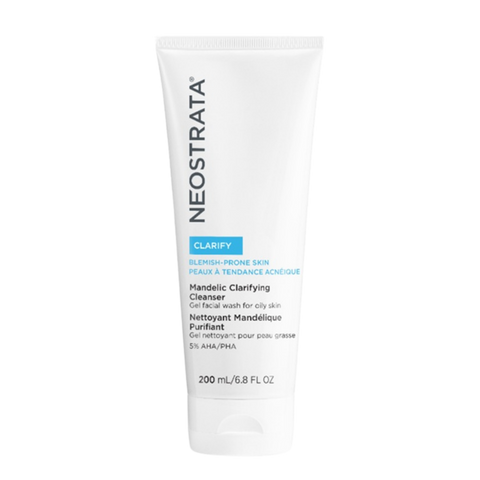
This was selected as a focused option for someone who wants cleansing and mild exfoliation in the same step. The combination of AHA, BHA and PHA is more considered than relying on abrasive particles or the idea that blemish-prone skin must be scrubbed clean.

Its role is to support a routine for oil and congestion, not to turn cleansing into the main treatment.

Dr Max GreenfieldMBBS, BSc, MRCS(Eng)

Routine placement

Where this fits

A broad guide to where this sits, without assuming how many steps your routine has.

Comes afterTea or coffee
This product NeoStrata Clarify Mandelic Clarifying Cleanser
Comes beforeOther leave-on products
Comes afterRemoving make-up or SPF, if worn
This product NeoStrata Clarify Mandelic Clarifying Cleanser
Comes beforeOther leave-on products
Curate your full skincare routine
How to introduce it

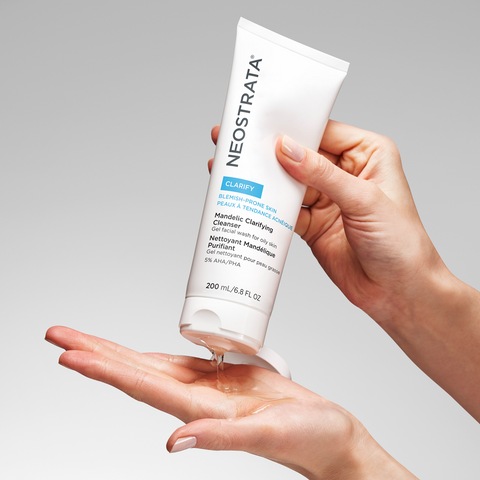
Massage a small amount over wet skin, avoiding the eye area, then rinse thoroughly with lukewarm water.

Begin once daily or on alternate evenings if acids are new to you. Increase only if the skin remains comfortable; twice-daily use is not necessary for everyone.

Use a separate gentle cleanser on days when the skin feels dry or when other active steps already make the routine demanding.

Guidance continues after purchase. We can help you introduce, simplify or adjust this product.

Inside the formula

The ingredients that make this special

A closer look at the ingredients doing the most meaningful work in this formula—and what the evidence can reasonably tell us.

Mandelic Acid

A gently exfoliating AHA that increases skin cell turnover and reduces inflammation associated with acne.

Read the clinical context

Mandelic Acid is an alphahydroxy acid (AHA) which means that it’s an ingredient that acts as a keratolytic, or a chemical exfoliant. Unlike other AHAs, mandelic acid is a really large molecule. This means that it doesn’t penetrate quite as quickly or as deeply as other AHAs (like glycolic and citric acid). That makes it perfect for those with more sensitive skin types. Because of its anti-inflammatory properties, it’s also great at calming down the redness associated with acne or as an entry level AHA for those with more sensitive skin or rosacea.

Salicylic acid

An exfoliating BHA that helps to increase skin cell turnover and support the treatment of acne.

Read the clinical context

Salicylic acid is a betahydroxy acid (BHA) that has a number of benefits, particularly for acne-prone skin. Its most well studied benefit is as a chemical exfoliant, particularly when with a lower pH. This increases how quickly skin cells turnover, bringing healthy skin cells to the surface. It’s also a hydrophobic or oil-loving molecule so helps to break down excess sebum and unclog the oxidised sebum trapped in pores (black heads). If that weren’t enough, salicylic acid is also anti-inflammatory and helps to calm redness associated with acne.

Gluconolactone

A PHA that very gently exfoliates and helps to support the skin barrier and calm redness.

Read the clinical context

Gluconolactone is a polyhydroxy acid (PHA) that not only acts as a potent antioxidant but also helps to very gently chemically exfoliate without causing any sensitivity. Gentle exfoliation from PHAs like gluconolactone helps to support the skin barrier and keep it functioning properly, reducing the amount of water that’s lost from the skin and preventing sensitivity.

Tea Tree Oil

An antibacterial ingredient that may support other evidence-based acne treatments.

Read the clinical context

Tea Tree Oil has long been used as a traditional remedy for acne and there is actually some evidence from small studies that show that its antibacterial and anti-inflammatory properties can help treat acne. I would never recommend it as a standalone ingredient but when combined with other ingredients may help to improve the formulation.

View the complete ingredients list

Aqua (Water), PEG-80 Sorbitan Laurate, Glycerin, Gluconolactone, Ammonium Laureth Sulfate, Triethanolamine, Disodium Cocoamphodiacetate, Mandelic Acid, Salicylic Acid, Panthenol (Pro-Vitamin B5), Melaleuca Alternifolia (Tea Tree) Leaf Oil, PEG-150 Distearate, Cocamidopropyl Betaine, PEG-40 Hydrogenated Castor Oil, Sodium Laureth Sulfate, Sodium Laureth-13 Carboxylate, Sodium Chloride, PEG-150 Pentaerythrityl Tetrastearate, PPG-2 Hydroxyethyl Cocamide, Polyquaternium-10, Polysorbate 20, Benzalkonium Chloride, BHT, Chlorphenesin, Phenoxyethanol.

The thinking behind the formula

More about NeoStrata

NeoStrata grew from the work of dermatologists Dr Eugene Van Scott and Dr Ruey Yu, whose research helped establish the use of alpha hydroxy acids in modern skincare. The brand has continued to develop acid-based technologies, including polyhydroxy acids, with an emphasis on how active ingredients are formulated and tolerated.

That history is relevant to the Restore Cleanser: gluconolactone is not included simply because acids are fashionable, but as part of a gentle formula intended to support comfortable, consistent cleansing.